


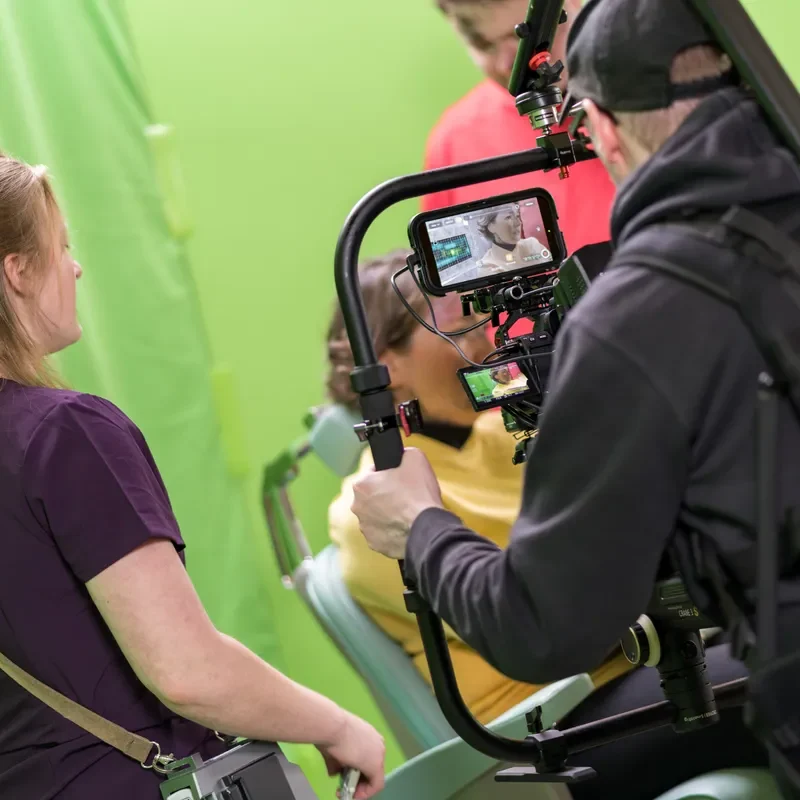
German studio Loreley Productions’ homemade Star Trek movies started the way many fan projects do, with a simple question: how far can you push this with what you already have?
Around 2020, that meant a small test film, a handful of people, and a lot of improvisation in order to get the first of three Star Trek fan-films off the ground, the latest being Part III: Erstontakt. But even at that stage, the decisions were already leaning toward something more structured than most indie shoots ever get to. “We decided to place our stories in the Kelvin timeline,” explains director of photography and writer Heiko Thies, “because the uniforms and props were much cheaper, but still look pretty screen-accurate.”
That kind of decision-making – not chasing perfect replication, but choosing a visual system that can survive a low-budget reality without falling apart on camera – is key to everything that follows. It’s the kind of choice other small film teams and solo filmmakers have had to make; it cropped up when I interviewed a father and son on how they made a Star Wars film in their garage. It turns out both productions relied on new tech, particularly the free app Jetset.
Fast-forward to now, and most of Loreley Productions’ work is done with similar tools to Star Wars duo Navaz and Roman Dowling – environments live in Unreal Engine, but they don’t stay locked in post, they’re stripped down, optimised, and pushed through an iPhone running Lightcraft Jetset Cine, which turns a phone into something closer to a live-production lens than a monitor.
Read more at Creative Bloq